
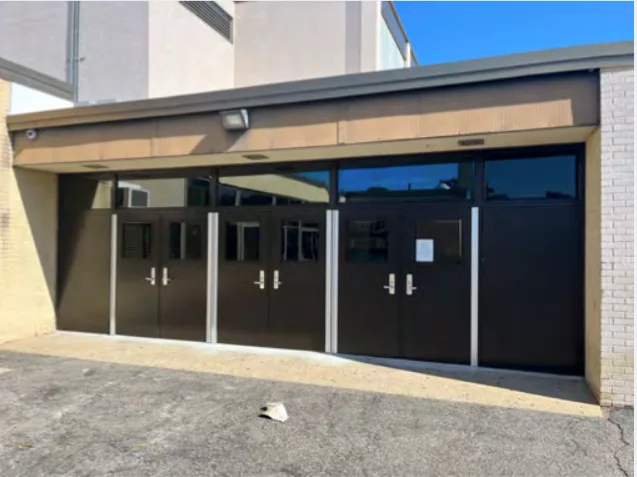
Key Takeaways:
- Hydro1® Pedestrian Flood Doors transfer significant hydrostatic loads into the building structure, giving them the strength to resist leaking. Unlike repurposed hollow metal pedestrian doors, these doors are developed specifically to withstand floodwaters, including special anchors that transfer hydrostatic pressure to the surrounding structure, keeping the barrier sealed and in place despite of floodwaters.
- Repurposed hollow metal doors are not engineered for flood protection. Standard hollow metal doors lack the structural reinforcement and anchorage needed to withstand hydrostatic pressure, making them prone to leakage and even failure during flood events.
- Retrofitted seals and gaskets are a critical failure point. Non-integrated or under-engineered sealing systems degrade over time and are vulnerable to misalignment and damage, significantly increasing the risk of water intrusion.
- Many “flood door” retrofits fail to meet compliance standards. Repurposed doors often do not meet modern flood protection codes or testing standards, which can impact building compliance and insurance eligibility.
- Hydro1 Pedestrian Flood Doors provide verified, purpose-built performance. Hydro1 doors are engineered specifically for flood conditions, featuring reinforced construction, industry-leading low leakage rates and third-party testing (including ANSI/FM and Florida High Velocity Hurricane Zone approval).
When it comes to flood protection, relying on a standard hollow metal pedestrian door that has been repurposed as a “flood door” can be a costly miscalculation. While these doors may appear robust, they’re often just traditional doors with minor modifications, unlike Hydro1 Pedestrian Flood Doors from PS Flood Barriers®, which are engineered from the ground up to withstand hydrostatic pressure and prevent water intrusion.
In fact, a purpose-built solution like the Hydro1 Pedestrian Flood Door is specifically designed, tested and proven to protect against flooding. The difference isn’t subtle – it’s the difference between uncertainty and peace of mind.
The Facts:
Products marketed as so-called “flood doors” can sometimes be hollow metal pedestrian doors that have simply been retrofitted with gaskets. These door may look like they would protect against heavy flooding, but they’re typically not designed, detailed or anchored to meet the structural and performance requirements needed for flood protection.
The Challenge:
Traditional hollow doors masquerading as “flood doors” have a number of inherent shortcomings in regards to how effective they are at holding back floodwaters.
- While a purpose-built flood door is designed to transfer significant hydrostatic loads into the building structure, typical hollow metal doors are not.
A critical component of effective flood doors – such as Hydro1 Pedestrian Flood Doors from PS Flood Barriers – is the anchoring. These doors are developed specifically to be secured against floodwaters, with anchors that work to transfer the pressure applied by rising water to the surrounding structure, keeping the barrier in place under flood conditions. - Hollow flood doors can buckle when faced with the pressure from deep floodwaters.
Standard hollow doors are built for security and access. They’re made to keep out unwanted humans and pests, but not unwanted water. Without specialized filling and insulation or carefully engineered reinforcement and testing, they struggle to withstand sustained flood loads. - Under-engineered seals and gaskets
Gaskets and seals that aren’t purposefully integrated into a flood door can come up short when flooding occurs. These under-engineered seals (sometimes even positioned on walking surfaces) are prone to wear, misalignment and damage, resulting in leakage over time. - Lack of code compliance
Many repurposed solutions fail to meet modern flood protection standards or building code requirements, putting facilities at risk of non-compliance. This can have negative consequences beyond just flood protection, impacting things like flood insurance. - The high cost of disaster
Repurposed hollow metal doors may seem like an inexpensive solution, but when floodwaters leak or flow into a facility and cause damage to equipment and infrastructure, their true cost becomes clear.
The Solution:
Hydro1 Pedestrian Flood Doors from PS Flood Barriers aren’t just modified building components – they’re purpose-built flood protection solutions designed from the ground up to perform under real-world conditions. They’re built with the components, including specially developed anchors, necessary to transfer significant hydrostatic loads into the building structure. Not only does this give Hydro1 doors the resilience to stand up to the destructive pressure of floodwater, but also debris strikes that can come with it (as heavy objects are carried by the current).
These pedestrian flood doors don’t just provide the lowest leakage rate in the industry, they’ve been independent-party witness tested to 3′ and 20′ water-protection heights with 50% less leakage than the ANSI/FM Approvals 2510-2020 4.3.3 standard (hardware included). In fact, they’ve been tested to the same rigorous FM standard as PS Flood Barriers’ legacy pedestrian flood doors. Perhaps the most tangible proof comes from the fact that the Hydro1 Pedestrian Flood Door has passed Florida Product Approval testing, including approval for the High Velocity Hurricane Zone (Miami-Dade and Broward counties). FL #3963. This recognition proves that Hydro1 Pedestrian Flood Doors are made to withstand some of the most powerful flooding events on earth.
When protecting people, property, and critical infrastructure, compromise is not an option. Choose Hydro1 Pedestrian Flood Doors for your industrial or commercial building. To learn more, click here. Or, contact PS Flood Barriers by using this form.